Pillar 01
Presence
Build trust and connection so people feel seen, heard, respected, and safe enough to engage.

The framework
Stress to Strength™ is a practical lens for understanding how stress, safety, communication, power, and system design shape participation, consent, and agency.
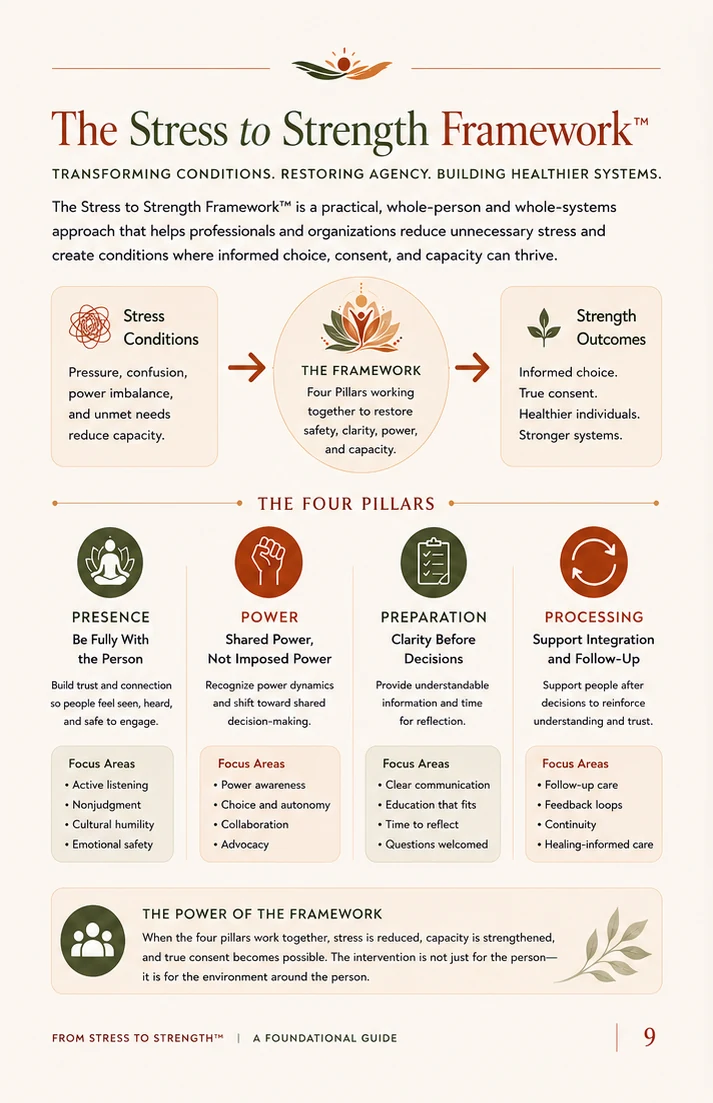
Four pillars
These pillars provide shared language for the framework. The training focuses on how to apply them in real interactions, decisions, workflows, and organizational settings.
Build trust and connection so people feel seen, heard, respected, and safe enough to engage.
Recognize power dynamics and move toward shared decision-making, autonomy, and voice.
Reduce uncertainty through clear information, realistic expectations, and space to process.
Support reflection, follow-up, continuity, and connection after difficult or high-stress experiences.
What the framework asks us to notice
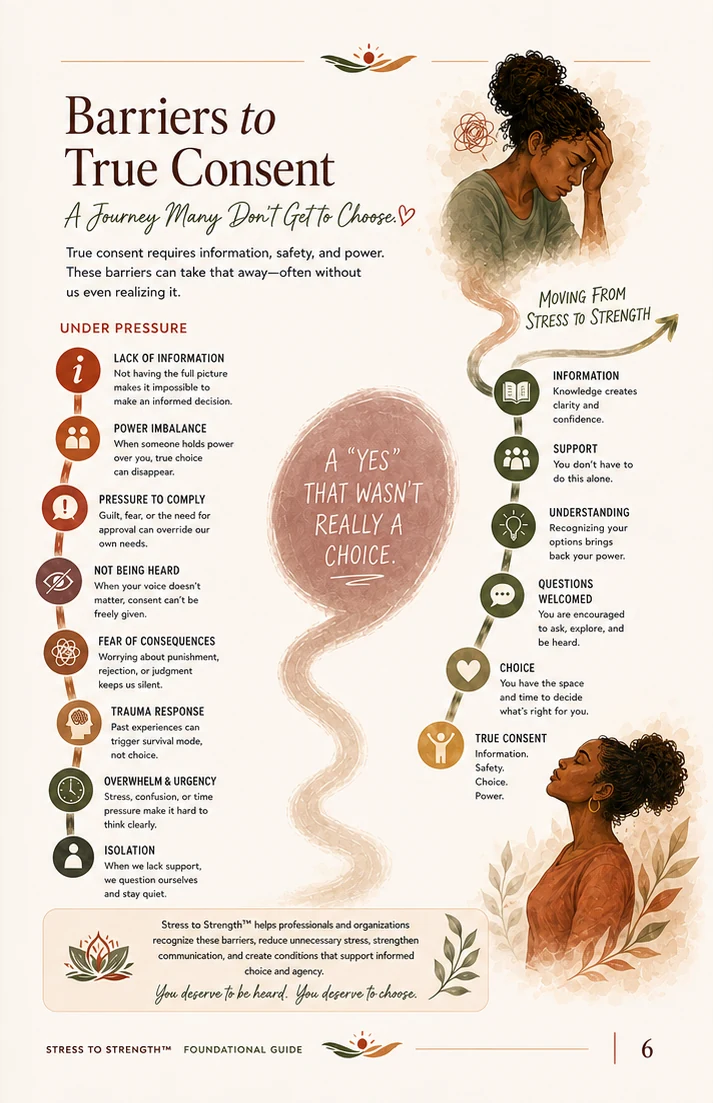
Stress to Strength™ shifts the question from only asking whether someone complied, understood, or followed through to also examining what was happening around them when they were asked to decide.
The boundary
The public framework explains the lens and why it matters. Training includes deeper scenarios, facilitation, application tools, reflection, practice change, and implementation.